Saturday, May 21, 2011

Zen and the art of garden maintenance


Gardening is the pursuit of the patient.  You plant but must wait for it to fill in.  You might plant something that doesn't thrive in your space or not live at all.  You have to take the long view and be willing to sacrifice hours and days and weeks and months.  I have never been a patient person.  Ask Brendan.  I have the utmost regard for people who garden because honestly, it takes a heroic effort that, when we moved in, I wasn't sure I could ever put forth.  Our house, and the couple who built it, are local legends.  Mary was a tiny woman but she was a gardening powerhouse.  She created extensive planting beds around the property and they're the kind of beds where there is always something in bloom.  Since mid March, we have not once been without some type of blooming tree, flower or bush.  It's beautiful.  And, it's deceiving.

I was talking with a neighbor down the street about our house and the gorgeous surroundings.  She said, "it's such a natural place."  She's right, it IS a very natural looking place.  When you come up to the house, it feels a bit like you have entered a wood that might be inhabited by fairies.  The children even made fairy houses as Mother's Day presents so we now have a housing project for any magical inhabitants.  But, it was very carefully designed to LOOK natural and that's a very different thing.

Mary passed away several years ago and keeping up the gardens was maybe too much physically for Ed  and maybe also too painful emotionally for him.  Interestingly enough, I didn't notice the weeds when we bought the place.  It's funny how that works, isn't it?  I look back now at the pictures we took and there they are - everywhere - but I couldn't see them then.  And, this Spring, when things began to grow, I was unable to tell what was planted and what was weed.  I had to wait for everything to grow in order to see what things were.  And, thank goodness I waited because the result has been extraordinary and it is rewarding to go outside every day.

I've always suspected that I might have a slight case of Attention Deficit Disorder.  I believe this is why my favorite room to clean in the house is the bathroom.  It gets so gross, with the kids spitting toothpaste everywhere - except in the sink.  And we have a four year old boy, so I don't think I have to tell you how disgusting the area around the toilet can be.  Plus, my children seem to get dirtier than everyone else's children.  Catie likes to war paint herself with juice from berries, for example, so the tub can get rings that are the stuff of legends.  You'd think I'd hate cleaning it but no.  I love that it's such a small room.  Even if it's completely trashed, I can have it spotless and gleaming in less than half an hour.  I adore instant gratification.

And so, I am astonished at how much I enjoy weeding the garden.  Flower beds, vegetable garden, around the fruit trees, you name it.  I am a completely schizophrenic gardener - working one day on the grapevine and the next on the front flower bed.  I have yet to actually completely finish working on any one area.  But, I think that's how gardening works.  I don't think you can ever be done.  I can weed around a fig tree and the next day, literally, the weeds will be back.  Not just peeking out of the soil, but 2 inches tall!  So, I don't worry that things are in a constant state of half doneness.  I just keep going, imagining that one day - far, far into the future - I might "catch up" to the gardens.

Before weeding

After weeding
For me, weeding the garden is a very zen thing.  Ripping out weeds is cathartic.  And, when a particularly large root comes out with my pull I am disproportionately proud.  I lie in bed at night, sore from bending over the beds, and I'm happy.  It's been said that successful gardening depends upon your enthusiasm keeping up until your back gets used to it.  My back is clearly not yet used to it but my enthusiasm is going strong, so I've got that going for me!


Friday, May 13, 2011

Plagues

Well, it's been a busy couple of weeks around here.  In addition to all the usual things, like work, gardening, keeping the house, tending to the chickens, and extracurricular activities, we've been beset by plagues.  I always thought that only happened in biblical times or in some third world country, but no.  We're in the middle of not one, but two unwelcome invasions.


It's the year of the Magicada here in NC, a 13 year cicada that apparently REALLY loved Pittsboro last time around.  It's known as The Great Southern Brood and it's a fitting name.  The periodical cicadas are really interesting, if for no other reason

than that they spend all but a few weeks of their 13 year life cycle underground and live for only a few weeks up above.  They began emerging here about 10 days ago or so and at first they weren't all that noticeable.  Then, one day, they were everywhere!  Their molted nymph shells can be found clinging to what seems like every leaf and tree trunk or forming a crunchy carpet under the trees.


Sidewalks and driveways are a war zone, strewn with bodies that were squashed underfoot or by car tires.  But, it's the sound that is most pervasive.  The males produce a high pitched whirring noise that is their mating call and when you are surrounded by millions of male cicadas looking for love it sounds as though an alien spaceship is hovering just overhead.  You can't escape the sound.  Even indoors with all the windows and doors closed, it's still there.  And, overlayed with the mating call is the response of the female cicada.  She clicks her wings to tell the males where she is.  The clicking would sound much like grasshoppers or crickets (without the chirping element), if you had hundreds of thousands of them in your backyard.  And they will land on you without a second thought - shudder.


But, as loud as they are, the cicadas are the more tolerable plague that is currently tormenting us.  Worse is the intestinal parasite that has decided to hang out here.  For more than two weeks now, one or more of the children has been ill.  Abdominal cramps and random vomiting have become the norm.  Evan's tally is most impressive, having thrown up in a restaurant dining room, the kitchen sink at a friend's house (thanks for being so cool about that, Kelley!), and for the win - in my parent's brand new car.  It was only 24 hours old.

Because we don't actually live in the middle ages, the most likely culprit for this bug was our well.  If ground water seeps into your well, you'll also get all the yucky stuff that comes along with it.  However, the health department tests of our water came back negative, so the mystery continues.  Even though my research into the parasite says chickens don't carry it, I'm planning to kick the birds off the porch this weekend so that I can soak the entire house in Purell.  The kids are on antibiotics also, so hopefully we'll win this round.

Wednesday, May 4, 2011

The View from the Tractor


I am neither as organized nor as informative as my lovely wife, but shall endeavor to offer a bit of my thoughts on our grand experiment….

Do you have an inkling, a modest comprehension, a well-informed opinion or a post doctorate level of knowledge on exactly how much grass is incorporated into 11 acres or so?

Neither did I.

It is a veritable sea of grass, not in any sort of post-Victorian poetic way, but in a tick infested, pollen hurling and downright vindictive way. I could actually sit and watch this grass grow.  It grows almost with malice, with a total disregard for my great plans to cultivate it and harness it - it grows that fast.  Of course when there is finally a time that presents itself to me in which I could mow this nefarious turf… it rains.  5 inches into drought and it rains!!!  Aargh.

Into this fray roars my bad-ass John Deere 2140 compact utility tractor.  Does a blog have sound effects?  If it did we’d need something very triumphant.  Superman perhaps, but not anything too orchestral, nothing John Williams.  It is 24 horsepower of raw green power - I literally swooned when I drove it for the first time.  It cuts grass like crazy and is more than a little fun to drive around.  When the neighbor came over to check it out I geeked out about it.

So problem solved?  Brendan gets a tractor, the grass cowers and all is peaceful in the land?  No.  People who visit the farm need, in a diabolical, neurotic, and somewhat obsessive manner, to tell him how much he needs to mow his grass, or even better how to do it.  This commentary is meant to be helpful, encouraging even - your neophyte farm owner knows this.  But did you really think I didn’t know that if you leave grass clippings on the lawn it might have a deleterious effect on the grass?  Geesh.  Sorry, Dad, I know you mean well.  

In other news I am still able to hoodwink people into thinking I can cook which means I am gainfully employed.  This seems to be a good thing, but I’d rather be taking sustainable agriculture classes down the road.  But since I am about as clueless about farming as I am about string theory I’ll keep making food.  The new pork shoulder is actually pretty good.

The chicks are getting bigger, Leslie finally got stung by a bee (justice), flowers are blooming and I still have to pick up the dog’s poop, so all is right with the world.

Tuesday, April 26, 2011

Spring Bounty

   Our family has recently joined the 10% Campaign.  This is a simple, genius idea and I urge you to please check this out and consider making the pledge yourself.  The Center for Environmental Farming Systems asks North Carolina residents to pledge to spend 10% of their food dollars on local products.  We, in NC, spend about $35 billion on food each year.  If we buy just 10% of that food locally, then $3.5 billion will be kept in our local economy and will support small local producers to boot.  You can get more information about the 10% Campaign at the following address and if you don't live in NC, please look to see if there is a similar program in your state.  

http://www.cefs.ncsu.edu/whatwedo/foodsystems/10percent.html

   There are nine farmers' markets and two local co-operative grocery stores providing local and organic products within a 20 minute drive of us.  Luckily, now that it's essentially summer in NC, they are all in full swing.  We can shop at a farmers' market on Tuesday, Wednesday, Thursday, and Saturday and on the off days hit the local co-ops.  Or, better yet, I can stop and visit the local farmers who set up from the back of their pick up trucks at the intersection a mile from our house, whenever they have something to sell.

   This past Saturday we decided to go to the Carrboro Farmers' Market.  It's one of the largest and best markets in the country, with more than 75 different farmers, and a few craftsmen, selling their products.  There is a wide variety of fruits and vegetables, dairy products from both goats and cows, meats and eggs, herbs, locally milled grains, a rainbow of jams and pickles and baked goods.  The Carrboro market is a true local farmers' market, allowing only products that have been produced within 50 miles of the market and requiring farmers to be present to represent their goods.  


We picked up strawberries, asparagus, pepper jelly, mint and lemon verbena plants, and the most amazing french breakfast radishes to use in Easter dinner.  We had hoped to pick up rhubarb as well so that Brendan could make his Aunt Mary's wonderful strawberry rhubarb pie for dessert.  You can see Brendan showing off this heavenly concoction on TV if you click on the link.  Be sure to keep your eye on the male anchor who finally gets fed up with waiting and tries to grab the pie!


http://www.bing.com/videos/watch/video/celebrating-pie-month-with-dc-coasts-strawberry-rhubarb-pie/1d2rwp80j

No one at Carrboro had rhubarb, so off to Chatham Marketplace we went.

Chatham Marketplace is Pittsboro's co-operative grocery store (http://chathammarketplace.coop).  The Marketplace is essentially a full service grocery, carrying everything from produce, meat, dairy and grains to green cleaning products and even has a prepared foods section that serves a freshly prepared lunch and dinner every day!  It is community owned and housed in a converted textile mill.  The restored mill is the home of the Marketplace as well as professional offices, a dance studio, and has room for community events.  Outside, there is a lovely pollinator garden consisting of more than 125 plants that attract bees, butterflies, and other pollinators that benefit farms.


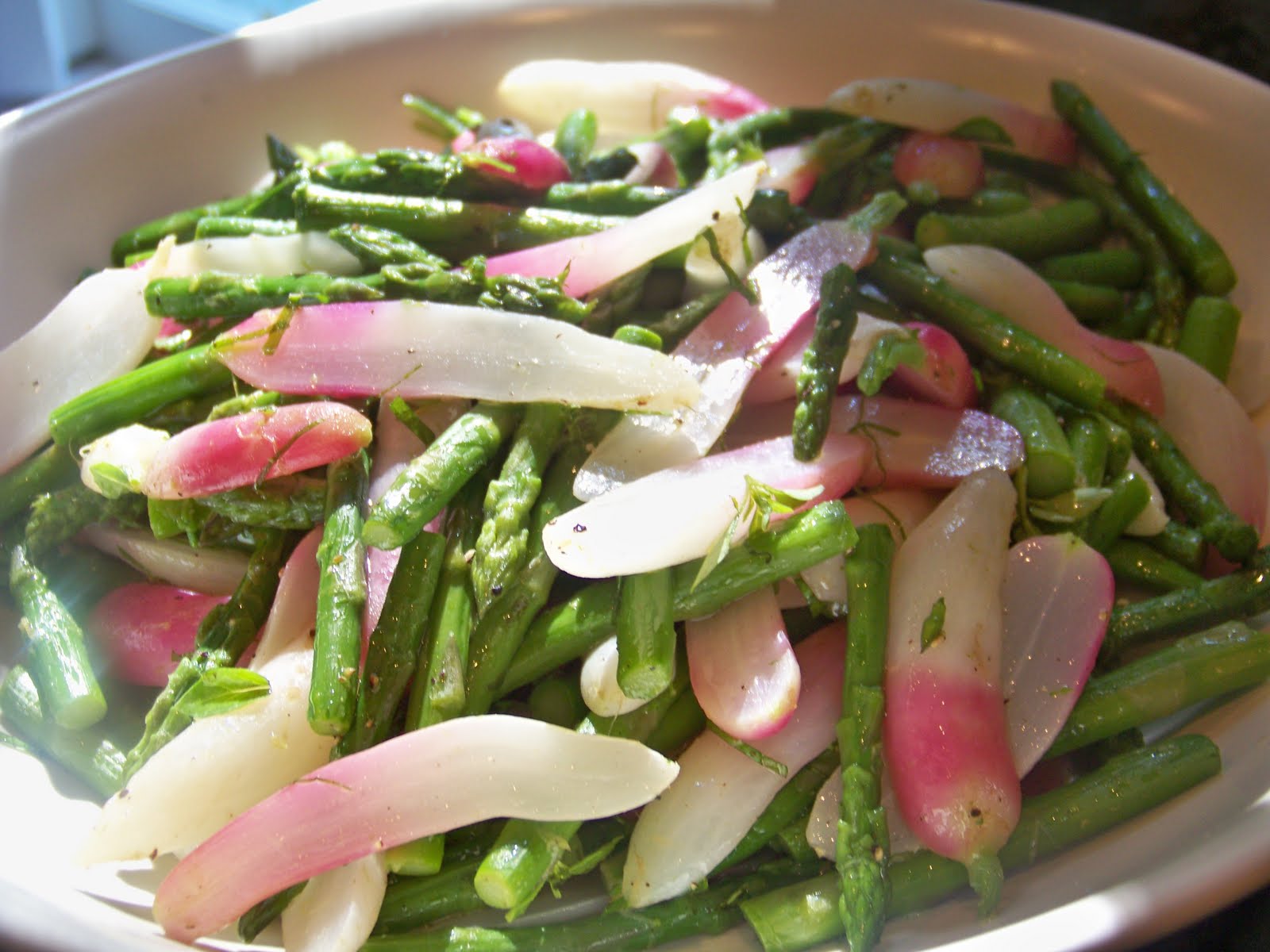
We were able to pick up rhubarb at the Marketplace and spent Sunday afternoon preparing for a big family dinner.  Brendan is happiest in the kitchen, whether at work or at home and I just try to stay out of the way.  It was a fantastic dinner, made all the better because we knew we had thrown our support to local farms.  Here's a sampling of what we all got to enjoy!


Wednesday, April 20, 2011

Finding ourselves

We spent a day with some real farmers this weekend and I'm feeling like a fraud.  This is not an unfamiliar feeling for me - after all, I'm 39 and am still waiting to be an actual adult.  And now I'm clear that it will be a long time before I can claim to be doing anything other than playing at being a farmer.

This reality check was graciously provided by the Carolina Farm Stewardship Association by way of the NC Piedmont Farm Tour.  Brendan and I signed up to be part of the Beginning Farmers Livestock tour along with twenty other wide-eyed, aspiring farmers.  We piled onto a tour bus to visit three very different local farms.  Each was fascinating in its own way and provided three distinct points of view on organic farming.

Our first visit was to Cozi Farm, which is run by a former Capitol Hill journalist, Suzanne Nelson.  Cozi is an organic, polyculture farm.  A polyculture farm is one which grows a variety of crops and animals rather than focusing on one or two crops/animals.  This is essentially what Brendan and I are hoping to do, just on a larger scale.  Cozi is a commercial operation that raises hundreds of chickens each year as well as sheep, goats, turkeys, pigs and cattle.  They sell meat and eggs at farmers markets and to restaurants throughout the local area.  We plan to supply only our own restaurant and perhaps a few friends and family.  Suzanne is an absolute true believer in organic farming.


Her livestock are pastured daily and when they do eat feed, it is a locally milled organic feed.  She refuses to use treated wood in the fencing in order to avoid poisoning the earth in any way.  Suzanne was really interesting to talk to and Brendan and I are both hoping to get to know her.  I'm a bit unclear on whether the operation is profitable as of yet but it is clear that Cozi is dedicated to their practices for their sake alone and I get the impression that profitability is a secondary concern.

Our second visit was to Cohen Farm, run by Esta and Murray Cohen.  Murray began organic farming in NC in 1971 when no one even knew what made a farm organic.  He was the first organic farmer in Chatham Co. and provides organic hay to dairy farmers through a contract with Organic Valley.  He also raises chickens, pigs and cattle for meat.  The Cohens are dedicated to organic practices, but always with an eye on the bottom line.  Murray states that he has no interest in having his beef be certified organic because of the costs associated with certification.  He also prefers to produce organic hay to sell rather than raise more beef because the hay is more profitable.  He struck me as a pragmatist - doing the best he can by the land and animals while continuing to make a living off the land.


Finally, we visited Wells Branch, LLC, a farm which raises cattle and pigs for meat - a very large and well organized facility raising hundreds of heads of cattle on hundreds of acres of land.  Wells Branch cattle is completely grass fed and antibiotic free, processed and sold locally.  We were introduced to Charles Sydnor, a doctor turned rancher who, while firmly believing in the benefits of organic farming, has his watchful eye always on the financial side of things.  In cattle farming, he said, profitability is defined as the absence of expenses.  To him, having his cattle be entirely grass fed is common sense.  He owns the land, it should work for him and feed the animals.  The animals should work for him by grazing and fertilizing the land.  The more work the land and animals do, the less the farmer has to to, thereby reducing expenses and maximizing profit.


It was so gratifying to meet these farmers and see that there are clearly different ways to approach the same goal.  So, how will we approach our goal of farming our little homestead as sustainably as possible?  I'm not sure.  What our farm becomes will depend entirely on what we hope our restaurant will be.  I think it will be a lot of trial and error, a process of slowly eliminating the things that don't work for us.  It has been said that anything worth doing is worth doing poorly at first.  Here's to a few years of doing poorly.

Thursday, April 14, 2011

For so work the honey bees ...

The queen comes separately from the package - she's the largest bee in the very middle of this small cage, surrounded by her attendants.


There is a low humming out back of the vegetable garden.  It's mesmerizing.

I'm a beekeeper now which amuses me.  I never thought about bees.  Keeping bees, that is.  I like bees and don't flip out if one flies near me which is a plus for a beekeeper I suppose.  But, I never once thought to myself, "I'd like to have a bee hive."  I did say that I wanted to grow vegetables, however, and bees are an absolute necessity for that to be successful.  If bees don't visit your cucumber flowers you do not get many cucumbers, end of story.  

And so it happened that I found myself taking a course on beekeeping through the local agriculture extension office.  Over the course of 8 weeks I learned all about bee anatomy, how to put together a hive, how to harvest honey, and how to spot and treat bee parasites and diseases.  It was fascinating.  Unfortunately, the class did NOT teach me how to get past the fear of being stung.  In fact, there was an entire class on the dangers of stings which did nothing to lessen my apprehension.  It's not a fear of the bee itself, it's a fear of the pain. I'm not a fan of pain.  

Trying not to think about it, I ordered my bees.  You can have them delivered by mail although the post office will not leave them in your mailbox.  Apparently if you order them by mail you can expect to receive a call from the post office asking you to come down and pick up your buzzing package immediately, please!  I decided to order mine from a local apiary so that I could pick them up in person and not have them go through the trauma of the USPS.  

We put the hive together and selected a site just behind the small vegetable garden for the bee yard.  It's far enough away from where the children play that I won't worry but close enough to view them and allow them easy access to the vegetables for pollination.  You can see that set up was a family affair - and Ironman joined us as well.  


As the pick up date grew closer, I became more and more nervous.  Reading the instructions for installing the bees did not help.  "Slam the box down sharply, so that all the bees fall to the bottom of the box.  Remove the lid from the box.  Turn the box upside down and shake vigorously, pouring the bees into the hive."  Right.  I had pictures from a horror movie playing inside my head.   

It didn't help that the day the bees arrived was unusually cool and rainy.  Cold isn't good for bees so I had to wait until the next day to move them into their new home, giving me even more time to stew.  I made the mistake of telling Brendan I was really nervous about it.  He, being the gentleman he is, offered to do it himself so I wouldn't have to.  You'd think he'd know by now that I absolutely cannot allow someone to take over a task from me.  I am stubborn and strong willed and would rather go down in the swarm of bees than be a  chicken, or worse, a quitter.  You know, it just dawned on me that perhaps he DOES know me that well and knew exactly what his offer would do.  I can't believe he tricked me!  

So, I donned the beekeeper jacket and veil and headed down to the hive with Brendan close by, taking pictures for posterity - or the insurance company, depending.  And it really wasn't bad at all.  It was really strange to have bees crawling all over me.  I couldn't feel them through the jacket and veil but I could see and hear them.  I could feel them on my hands and it was incredibly weird to have them crawling between my fingers.  They weren't aggressive at all.  It was more like they were curious, checking me out.  The most difficult part was that a certain contingent of the bees refused to come out of the box despite the fact that I was shaking it as hard as I could.  I finally gave up and left the stragglers in the box next to the hive.  They eventually found their way out and into their cozy new house.  

Sharply jarring the box of bees!


I was so proud of myself and I didn't receive even one sting.  Brendan was not so lucky.  Because the new hive of bees have no honey stores, we have to feed them sugar syrup (as for hummingbirds) until they start making their own honey.  I had Brendan help me carry jugs of syrup down to the hive and a bee flew up his shirt.  When it couldn't get out, it panicked and stung him on the stomach.  It's a good thing our neighbors are fairly far away because he came out of his clothes pretty darn quickly.  I'm sure this makes me a bad person, but I'm glad it was him and not me!  He's tough.  

And now I love to go down to the hive.  At night, when they're all inside, you can hear the soft hum that lets you know the box is alive.  During the day, I watch the bees fly out and am thrilled when I see the bees returning home with their pollen baskets full.  Those of you who know me well know that I am a Shakespeare junkie and I can't help but quote Henry V.  "For so work the honey-bees, Creatures that by a rule in nature teach The act of order to a peopled kingdom."

I already love my girls.  I'm a beekeeper now.  


Friday, April 8, 2011

The Chicken or the Egg?

The answer to the age old question is:  the chicken.  At least on our farm, anyway.  We just picked up 22, adorable, peeping, baby chicks and we couldn't be any prouder if they were our own children!

Let's back up a bit.  Despite the fact that Pittsboro, NC only has a population of approximately 3700 people, we are the home to a couple of agriculturally important organizations.  One of these is the American Livestock Breed Conservancy, a national non profit group that works to protect heritage breeds of livestock from extinction.

There are many different breeds of livestock and you may have never thought about any particular breed as being important.  You may not have had any idea that there are breeds of cattle, pigs, chickens, etc. that are on the verge of extinction.  For generations, farms across the United States raised a myriad of breeds of livestock.  Farmers in the north raised breeds that were better suited to harsh winters and farms in the south raised breeds that were tolerant of our long, hot summers.  Heritage, or historic, breeds of livestock are those breeds that have been around for a very long time, many since the early days of American farming.

In recent times, "factory farming" has come to dominate agriculture in the U.S.  The idea of factory farming began in the 1920's when Vitamins A and D were discovered.  If you give animals these vitamins, they don't need exercise or sunlight to grow.  You don't need to wait for summer and green grass - you can keep the animals indoors and just give them cheap feed.  This is great for the bottom line.  But when you do this to animals, disease tends to spread.  What do you do then?  You give them antibiotics.   The conditions in which these animals are kept are horribly inhumane.  This blog is not meant to be a rant about industrial farming so I'm not going to go into details here.  I do, however, encourage you to become educated about where your food comes from.  You can read anything from Fast Food Nation to The Omnivore's Dilemma, and there are many, many more.

All this affects livestock breeds because factory farms tend to use a very few, specialized breeds of livestock.  A farm that raises tens of thousands of chickens for only seven or eight weeks until they are processed for meat only cares about how quickly a breed gets to processing weight and will choose it's breed accordingly.  Heritage breeds of livestock are often more multipurpose, such as a chicken that is both a decent egg layer and a good meat bird.  The American Livestock Breed Conservancy works to save these traditional breeds of livestock and thankfully, I stumbled into their office one day shortly after we moved to Pittsboro.

I found the ALBC online when I was researching heritage breeds and was delighted to learn they are around the corner from our farm.  I stopped in unannounced one day just to ask them which breeds of chicken were best suited to our region.  The next thing I knew, I had signed up to help with the Java recovery project.

Javas are a critically endangered breed of chicken.  Estimates are that only about 2000 of them exist today, which is a comeback from a mere 200 birds in 1990.  They are one of the oldest American breeds, dating to the early 1800s.  They are the classic dual purpose bird and are great foragers.  They're perfect for us!  We've built our chicken house and our guys and gals will get to free range our 11 acres to their hearts' content.  We'll use both the eggs and the meat in Brendan's restaurant and also hope to help contribute to the comeback of this beautiful breed.

So - the chicks!  We were expecting to get our birds in May but got an email saying a clutch would be hatching this week and did we want them?  Of course we did!  Brendan quickly built the brooder box (with the help of the kids) and we waited for the call that they had hatched.  Early Wednesday morning we got to pick them up.  We have 5 black and 17 white (some may be mottled) javas living on our enclosed porch.  Our dog, Sadie, thought they were interesting until they moved, at which point she ran, terrified, into the next room.  It's a good thing we don't need a guard dog.

We're having the best time watching them.  They'll stay in the brooder box until they are fully feathered and then they can move out to the chicken coop.  I like to sneak up to the box and say "hello!"  They all scramble like Chicken Little and it just makes my day.  As you can see - I'm a huge dork.  The kids absolutely adore them and there's just nothing cuter than a small child holding a baby chick.  Now if I can just figure out how to add pictures to this blog!